
I think someone I care about is in an unhealthy relationship.
The Dilemma of Watching Someone You Love Struggle
When you care about someone who’s struggling, it can feel impossible to know what the right thing to do is. You want to be supportive, patient, and understanding without enabling them.
What makes this so hard is that there often isn’t a clean answer. You may go back and forth between compassion and resentment. Between staying because you care and leaving because you’re exhausted. The tension and confusion are normal.
This journey isn’t about telling you what to do. It’s about helping you understand the dilemma you’re in, so you can make choices that are honest, sustainable, and grounded in reality, not guilt or fear.
The Science of What Keeps People Stuck
People don’t stay in unhealthy relationships because they don’t know better. They stay because their nervous system tells them it’s safer.
When something reduces anxiety or restores a sense of connection — even briefly — the brain learns to repeat it. Relief becomes reinforcement. Over time, the system prioritizes what feels regulating now over what might be healthier later. That’s why logic alone doesn’t break patterns. The body reacts faster than conscious thought.
Stuckness isn’t a lack of willpower. It’s a nervous system doing what it was wired to do: avoid threat, preserve attachment, and stick with what’s familiar.

Understanding What They’re Up Against
When someone stays in something harmful, it’s usually not because they’re blind or obsessed. It’s because their system learned patterns early on that now activate automatically and feel true, even when they aren’t helpful.
Sometimes love and fear get fused. Closeness triggers panic instead of safety. From the outside it looks irrational; from the inside, the fear is overwhelming
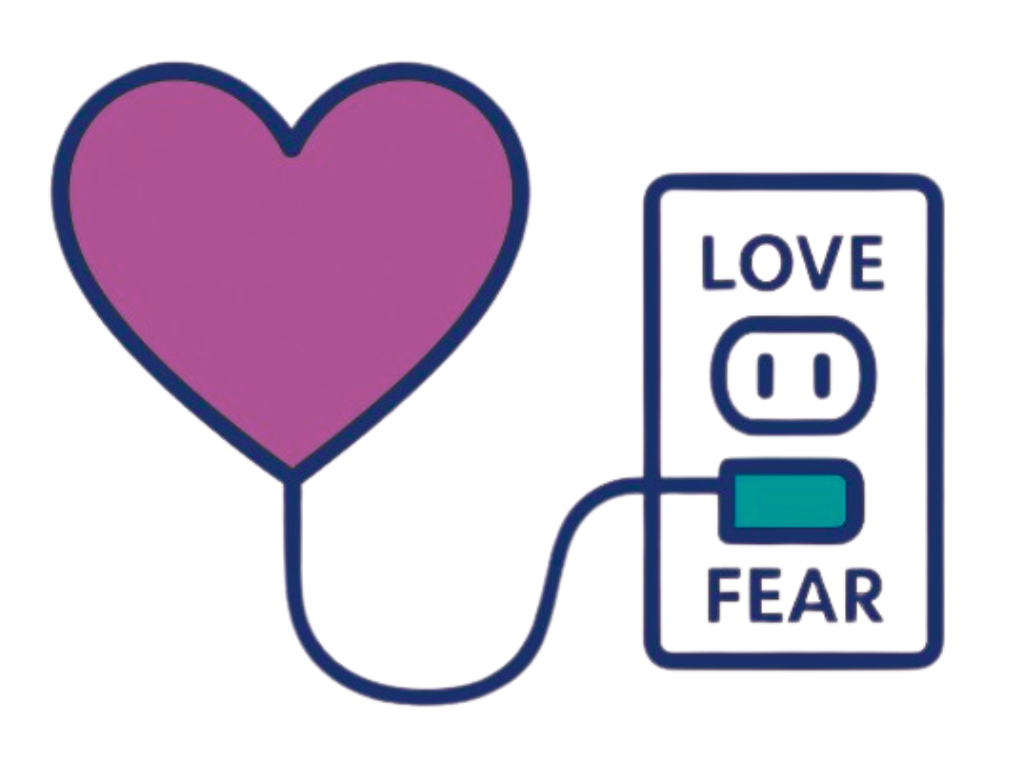
Sometimes love gets fused with pain. The suffering feels tied to connection, so breaking the bond feels unbearable — even when they know it’s hurting them.
Regardless of the specific wiring, relationship decisions are deeply tied to the nervous system. Yours isn’t entangled. Theirs is. You can see logic; they’re trying to survive what their body interprets as threat.
That difference matters.
Your response can either help them feel understood, or deepen their isolation. The urge to fix is human. But most people don’t want to be fixed — they want to be understood.
*Note: The system responds the same way to physical abuse; the intensity just scales with the level of harm. If you ever suspect physical abuse, be gentle. Avoid judgment or “If I were you…” comments. Don’t tell them to leave—this is often when danger escalates. Encourage professional support without pressure.

Emotional Support 101
Being supportive isn’t about giving your friend solutions or lifting their spirits. It’s about holding space for them to fall apart and making sure they feel heard. You don’t need to have answers or offer fixes—in most cases, that’s exactly what you shouldn’t do.
You don’t need to steer the conversation or find the perfect words. Most of the time, they’re not looking for an answer, they’re looking for a place to be honest. Your job is to be a steady sounding board, sometimes for the same thing again and again. The goal isn’t to move them faster toward clarity; it’s to give them a safe enough space to find it on their own.
Good support means validating their experience, truly listening, and being cautious and intentional if you choose to give advice. Your job isn’t to solve their problem; it’s to help them feel less alone in it.
Supporting someone well often happens in stages: first helping them feel safe enough to talk, then helping them make sense of what’s happening, and finally helping them move forward without losing yourself in the process.
Social Processing Block
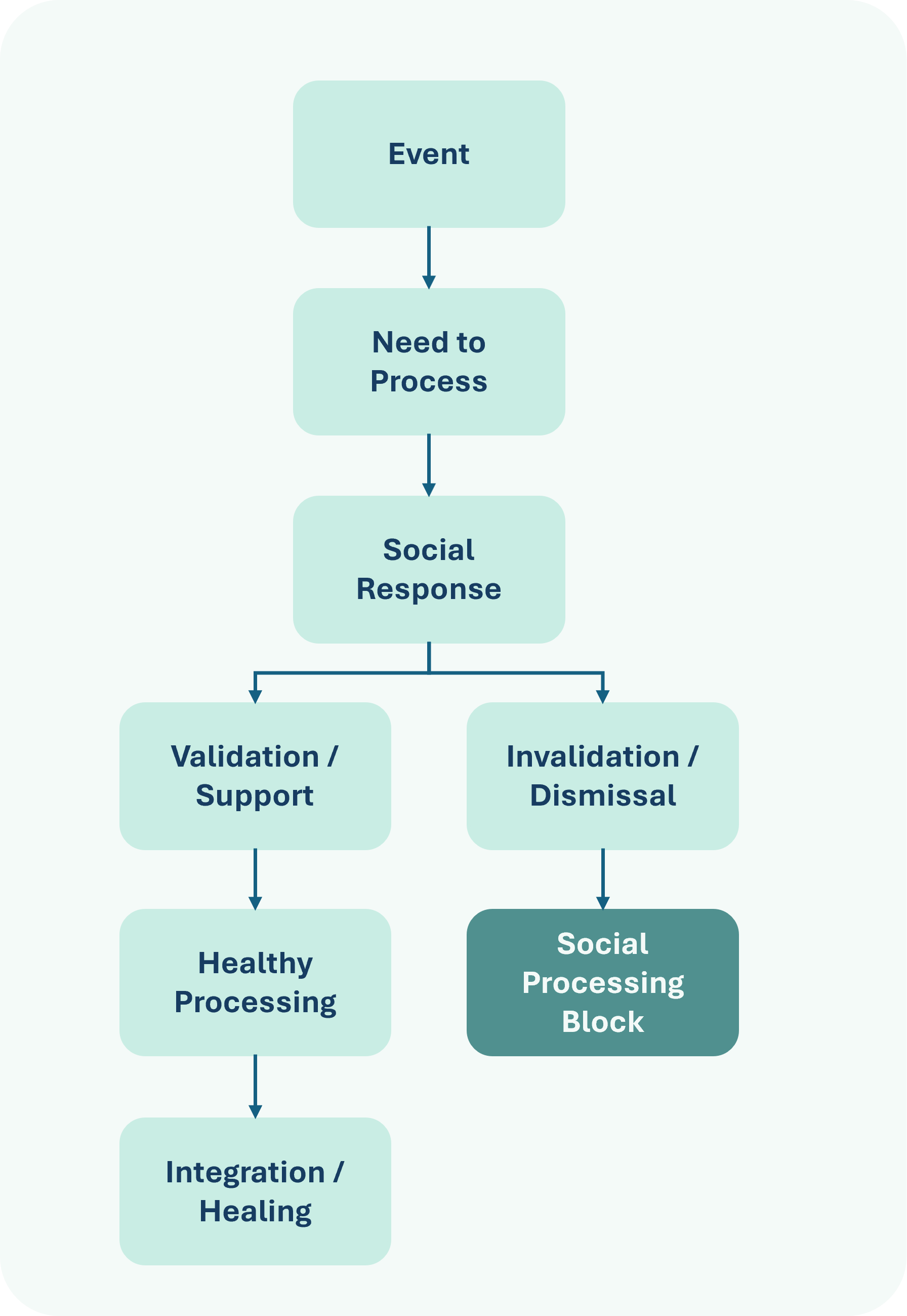
When someone is trying to make sense of something painful, they need space and validation to process it and their own timeline for healing.
The way other people respond can either support that process or block it. Feeling heard and emotionally understood helps them sort through it, feel their feels, and when they’re ready, move on.
Dismissal, minimizing, or pushing them before they’re ready can interrupt this. Instead of processing, they’re defending themselves or desperately trying to be heard. This carries strong consequences for the one who is struggling.
Here are 4 things you can do to better support someone who is currently in or coming out of an unhealthy relationship.
Validate, Validate, Validate!
Acknowledging that what they’re feeling makes sense given their experience. You’re not validating the facts; you’re validating their emotions.
Simple statements go far:
“That sounds awful.”
“I can see how much that hurt.”
“Anyone would struggle in that situation.”
What isn’t validating are comments like, “Every relationship has problems” or “You’re probably overthinking this.” After a breakup, saying “Someone better is around the corner” doesn’t create hope — it can make them feel like they shouldn’t still be hurting.
Most people minimize pain because they feel uncomfortable watching someone suffer. But support isn’t about making the moment lighter — it’s about making the person feel understood.
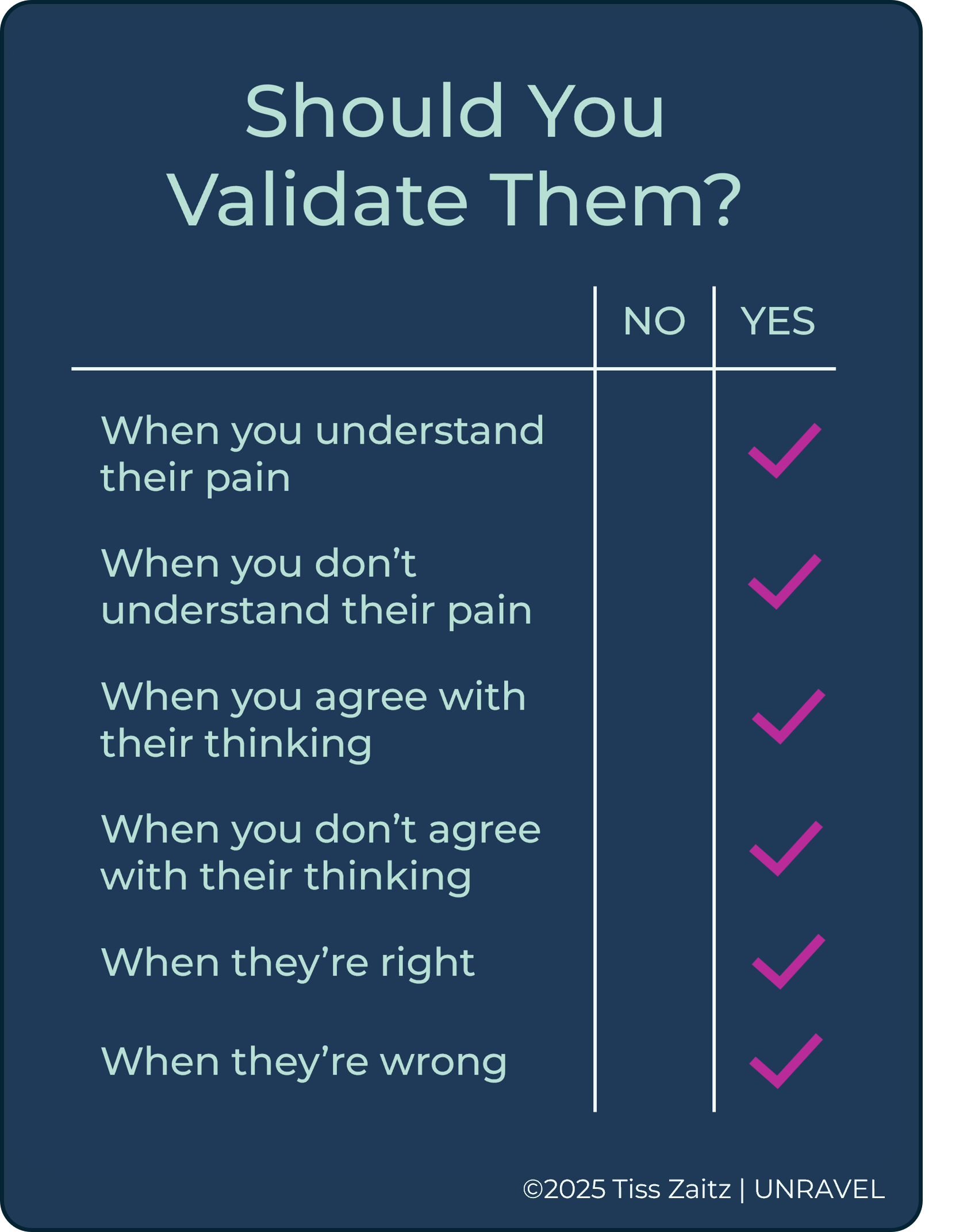
Not everyone feels or expresses emotions the way you do. Don’t argue with their feelings just because you wouldn’t react the same way. Validate the anger, the shame, the confusion, the disillusionment.
And remember: emotional abuse builds slowly. It’s rarely one dramatic moment. It’s the repetition of small things over time. If something sounds minor, get curious instead of brushing it off. The single event is rarely the point — the cumulative impact is.
Want to review some examples? Click the “Don’t say” boxes below to reveal what you could say instead.

Shut Up and Listen
Being a good friend isn’t about saying the right thing or solving the problem. When someone is in pain or trying to make sense of an unhealthy relationship, they don’t need advice. They need your steady presence.
It’s uncomfortable to sit with someone’s pain without fixing it. Silence can make you feel like you’re failing. You’re not.
They might talk in circles or repeat themselves. That’s normal. Repetition is how people work through confusion. When they feel heard, the looping slows down. When they feel dismissed, it continues.
Listening is active. Nod. Wince. Say, “That sucks,” “Ugh,” or “That sounds really hard.” Small reactions show you’re there. Don’t interrupt, redirect, or scroll on your phone. Ask open-ended questions and let them ramble.
If something reminds you of your own experience, keep it brief. A short “I remember how confusing that felt” is enough. Don’t shift the focus to you.
If they pull back, don’t automatically assume they want space. Sometimes they’re overwhelmed or worried about being a burden. Keep showing up in small, steady ways.
They don’t need you to erase the pain. They need someone who won’t disappear when it shows up.
When emotions are high, the ability to think logically goes down
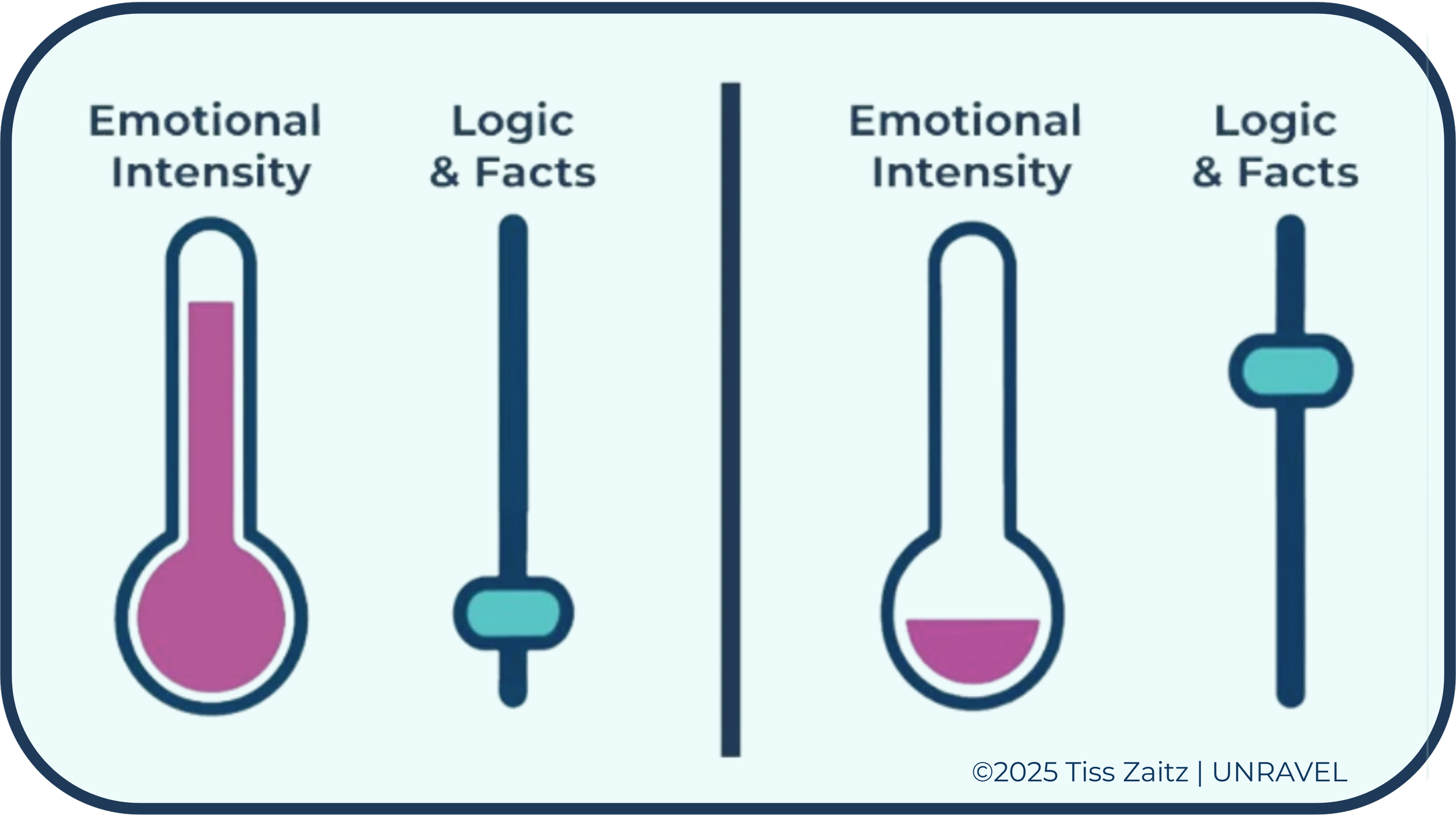
When emotions have cooled, logical thinking becomes easier

Some Advice on Giving Advice
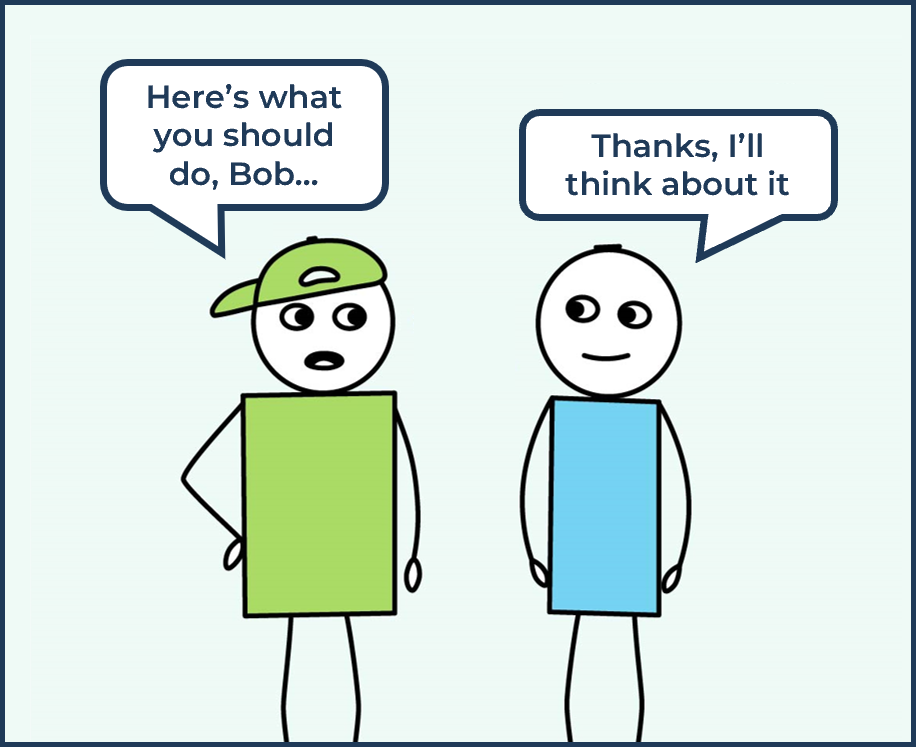
When someone you care about is stuck in an unhealthy relationship, it’s easy to think the right advice will help them heal and move on. It probably won’t. Not because you’re wrong, but because advice doesn’t work the way we think it does.
Why Advice Tends to Backfire
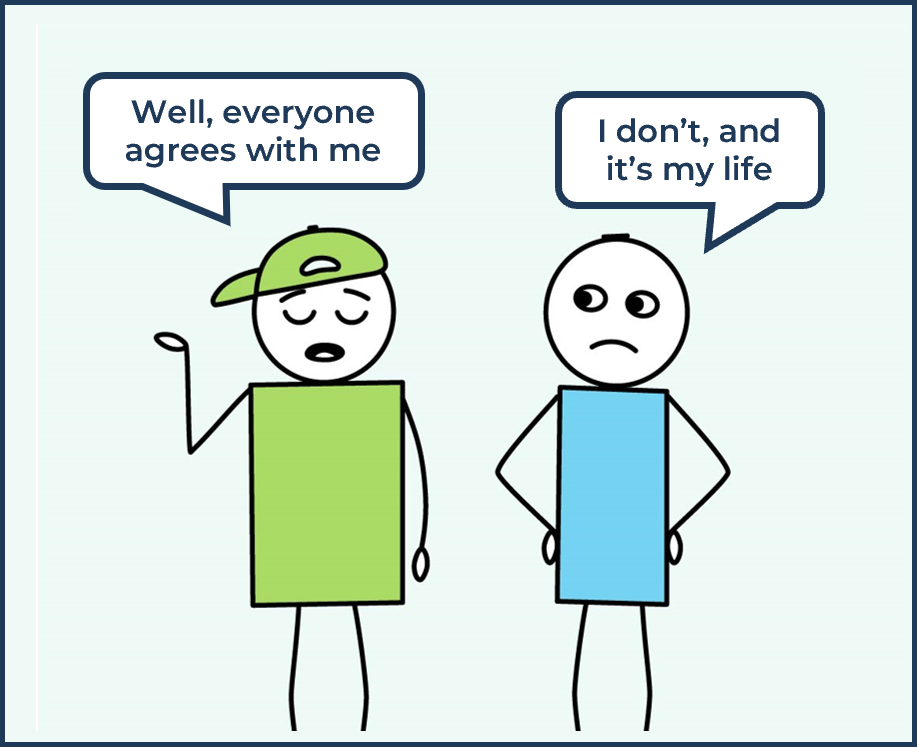
Advice can feel like you’re saying “You don’t know what you’re doing, so I'll tell you what to do.”
If they already feel powerless in their relationship, that can hit a nerve. They don’t want to lose more agency, even to a well-intentioned friend.
So instead of feeling supported, they feel pressured.
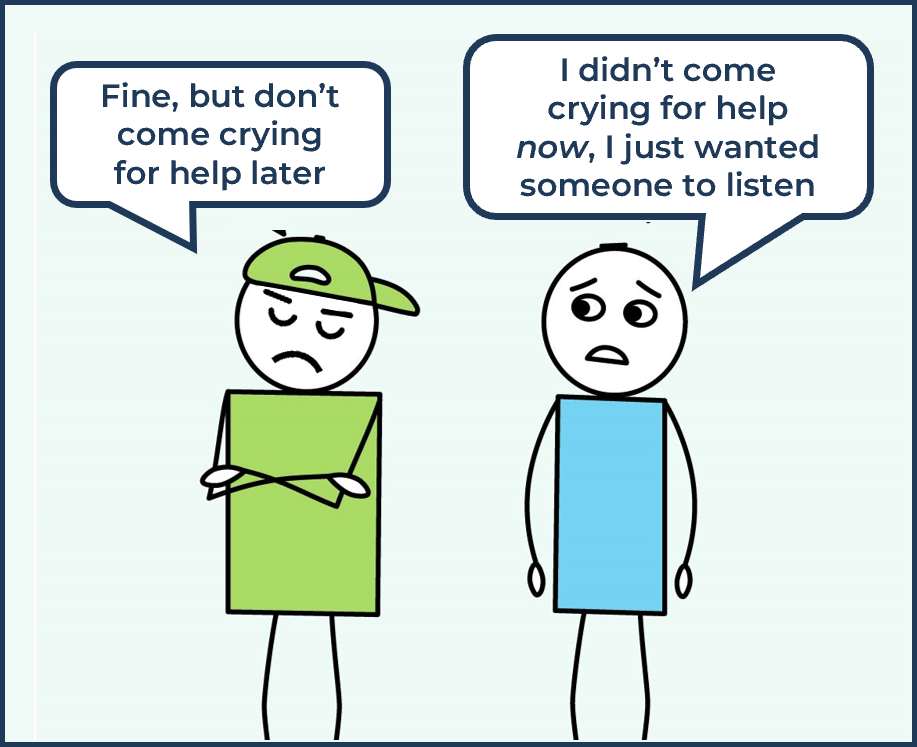
That can kick their nervous system into protect-my-choice mode. So they defend the relationship and their decisions harder, or do the opposite just to stay in control. It’s not stubbornness; it’s self-preservation. And it’s often unconscious.
This is why even the best advice can actually push someone in the wrong direction.
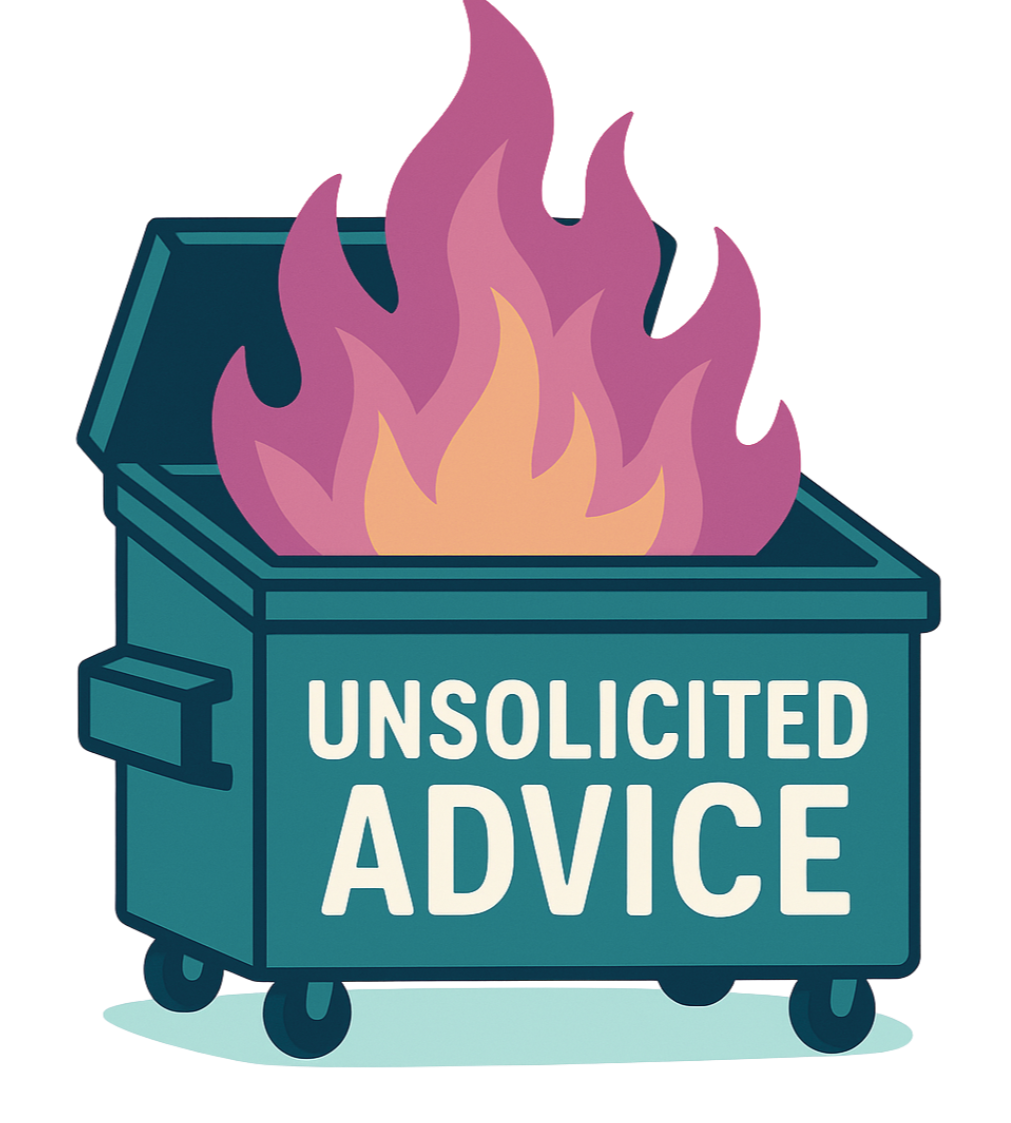
What Not to Do When You’re Trying to Help
Some approaches make things worse, even if you’re right.
Don’t tell them what they “need to” or “should” do. It can make them feel like they’re failing at their own life. It can also feel like you’re taking control away from them.
Don’t repeat the same advice hoping it will stick. Say it once then let it be their decision.
Don’t make their choices about you. Saying “I can’t watch this” or “If you won’t help yourself, I don’t want to hear about it” is judgey and a little self-righteous. It not only makes their pain feel like a burden, but it suggests your friendship is conditional on how they handle their own struggles.
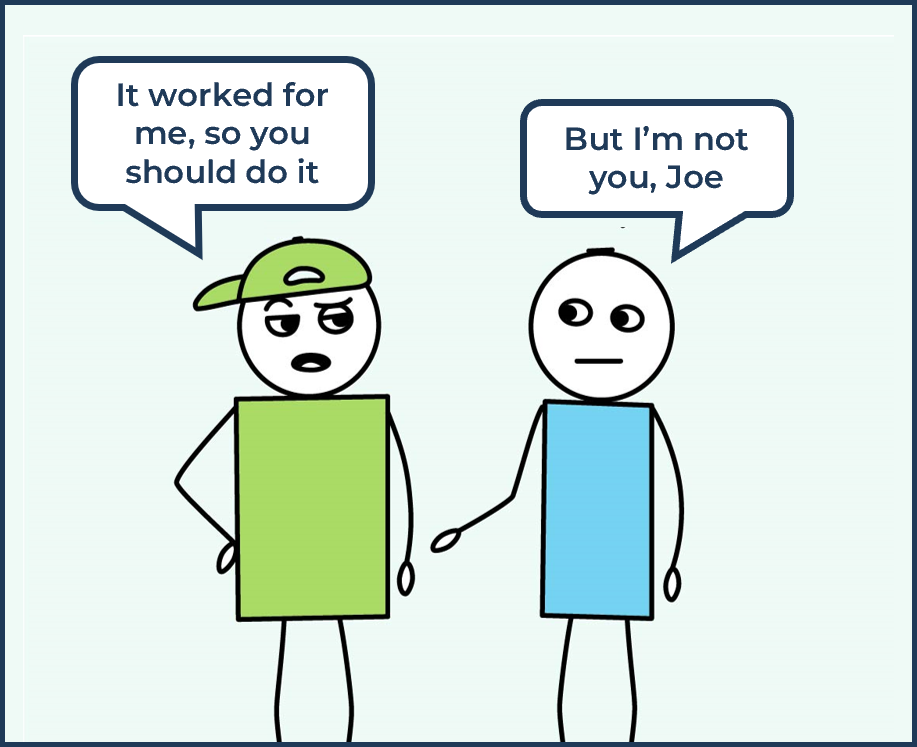
Don’t assume your values are the standard. Acting like your path is the right path pushes people away. Let them make the choices that feel right to them.
Don’t take it personally if they have less capacity to show up for you or others.

What Actually Helps Instead
Ask before giving advice. “Do you want my thoughts?” or “Can I make a suggestion” keeps their agency intact. If they say yes, keep it short and frame it as a suggestion, not a directive. Gentle nudges are fine. Prescribing solutions isn’t.
“You need to leave” or “You need to let go and move one” are almost never helpful. If they want your help, come up with smaller steps that might move them in the right direction.
Stay curious. Ask questions like “What feels hardest right now?” to help them think instead of defend. Instead of “You need to leave,” ask what hurts most or what keeps them there.
Offer tools, not outcomes. For example, suggest keeping a simple log of behaviors and feelings. Over time, patterns become clearer when they’re written in their own words.
Don’t confuse disagreement with rejection. Not following the advice from you or others usually means they’re choosing what feels manageable or aligned with their values. It’s not personal and it doesn’t automatically mean they aren’t trying.
Set Boundaries So You Don’t Burn Out
Supporting someone through an unhealthy relationship or breakup is rarely short-term. They may repeat the same fears, stories, and questions. That’s normal. When someone is scared or stuck, their mind loops. They’re not being dramatic; they’re trying to make sense of something that feels overwhelming.
But normal doesn’t mean you have endless bandwidth. If you’re getting frustrated, it’s better to be honest than to fake being present or quietly pull away.
A boundary here isn’t, “I’m tired of this.” It’s, “I want to be supportive, but I don’t have the capacity tonight,” or “Can we come back to this after my deadline?” You’re not ending the conversation. You’re pacing it.
If the looping starts to overwhelm you, you can also guide the tone: “I feel like we’re going in circles,” or “Can we shift gears for a few minutes?” A pause can help both of you regulate.
Boundaries aren’t abandonment. They prevent resentment so you can keep showing up in a way that’s sustainable.
Supporting someone through an unhealthy relationship is confusing, repetitive, and emotionally unbalanced. That’s just how it is.
The fact that you’re here trying to understand how to show up for them already says a lot about the kind of friend you are.

Before you go…
I hope this journey gave you something useful—clarity, validation, maybe even a little relief from the confusion.
If you're feeling overwhelmed or unsure what comes next, that makes sense.
You're working through hard things.
If you want to keep going, UNRAVEL has more to offer:
The Foundations explain the mechanics of relationship behavior.
The Models & Frameworks show how those mechanics create the patterns people get stuck in.
Those pages take a slightly more educational approach.
But they’re still written in clear, everyday language.
No jargon. No 7 syllable words.
If you want to share your story, you can do that here.
Your experience matters.
Thank you for trusting me to guide you. I hope you find healthier, happier relationships ahead.

Every relationship is unique, and emotional harm doesn’t always follow the same patterns. What you’ve read here reflects common dynamics, but it’s not a diagnosis. I hope something resonated, but this content isn’t therapy or psychological, medical, or legal advice. It’s here to offer clarity, not conclusions.