
I Want To Understand My Own Patterns
Why You Do What You Do
This isn’t about figuring out if something is wrong with you. It’s about understanding what your mind and body learned to do to stay safe, connected, or protected, and whether those strategies are still serving you. The key distinction is the question you ask yourself. It’s not “what am I doing wrong?” It’s “what am I doing that isn’t working.”
Most of the behavior that keeps us stuck in hurtful dynamics is, ironically, self-protective. What kept us safe in our early years often becomes harmful as adults. The problem is that it feels safe in the moment. That doesn’t make it “wrong.” It makes it confusing.
Your behavior isn’t random, and it isn’t a personality flaw. It’s the result of years of learning what connection may have cost you and what you had to do to survive it.
Whatever you default to now—shutting down, chasing, overthinking, people-pleasing, deflecting, withdrawing, avoiding conflict, picking fights—didn’t come out of nowhere. It came from a nervous system that learned its rules long before you had much say in the matter. Your system paid attention to what led to closeness, what led to rejection, and what kept you safest. Then it adapted.
If you grew up with unpredictability or rejection, inconsistency can feel normal and distance can feel safe. If you grew up earning approval, you may still live by earning it. Not because you want to, but because your system learned this was the price of staying connected.
This journey isn’t about blaming your past or excusing your present. It’s about understanding that your Relational Operating System is still running old code, and old code doesn’t delete itself just because you now know better. You react the way you do because it once worked. And if you want to change, your autopilot has to be retrained, not shamed.
Once you can see the logic underneath your behavior, you finally have leverage against your own system. And that’s where real choice begins.

Your Old Survival Strategies
Much of what you do in relationships isn’t driven by conscious choice. It’s driven by what kept you safest when you were younger. These strategies weren’t unhealthy at the time, they were adaptive. They helped you avoid trouble, maintain peace, preserve connection, and feel seen instead of invisible. You learned what worked, and you repeated it.
The problem is that your nervous system doesn’t update itself just because you grew up or your life changed. It keeps using the same moves long after they’ve stopped being useful.
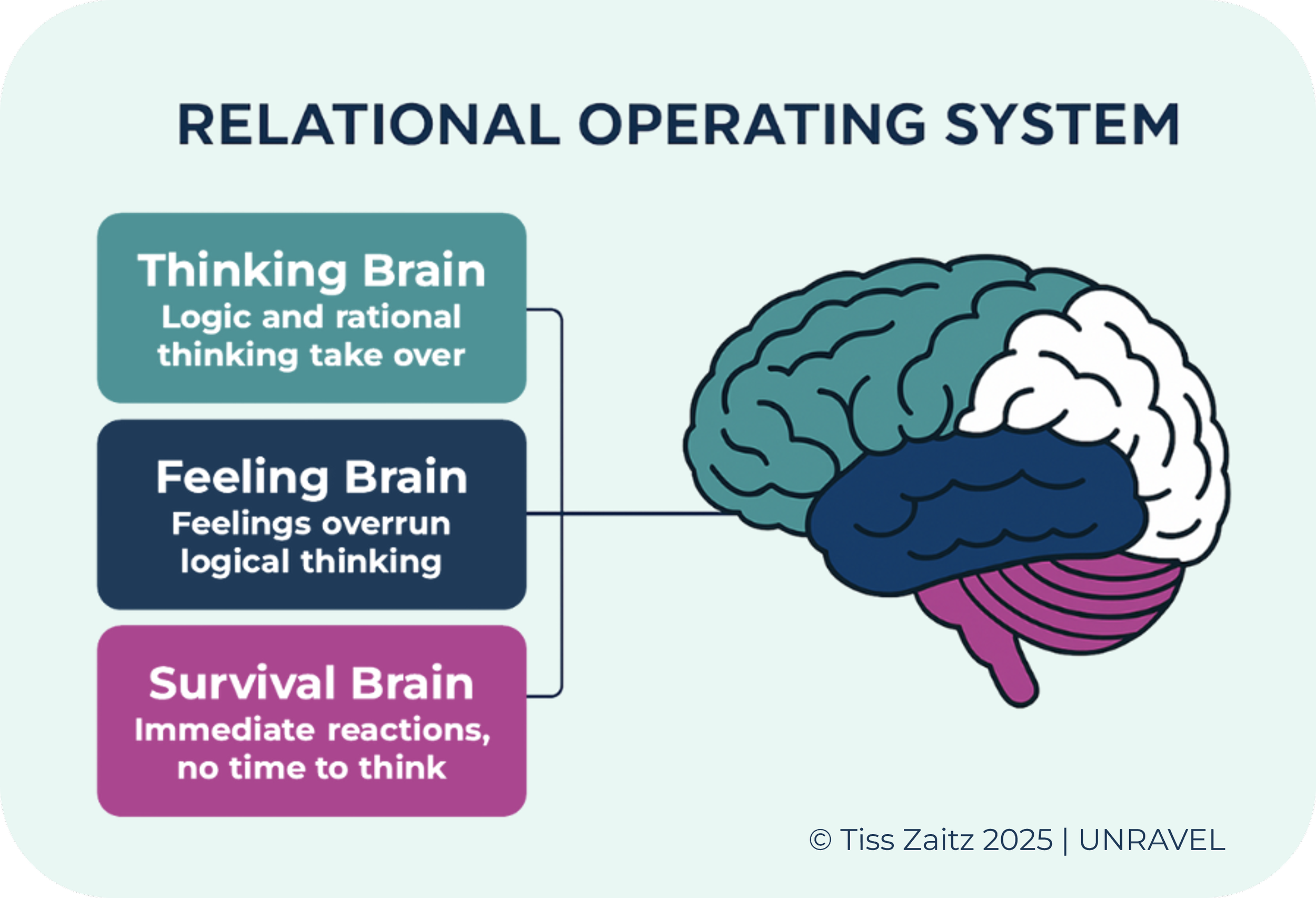
When something signals fear or danger, whether real or perceived, your Survival Brain reacts first. Its only job is to keep you safe. Your Feeling Brain then amplifies that signal, flooding your system with emotion and urgency. Your Thinking Brain usually shows up last, trying to make sense of what’s already in motion.
That order matters.
By the time your Thinking Brain is online, your system has often already acted. So when you shut down, overthink, fix, chase, overexplain, withdraw, or avoid, you’re not actively choosing those behaviors. You’re defaulting to the self-protective autopilot your nervous system still believes you need.
For some people, that autopilot looks like distancing or disappearing emotionally. For others, it looks like leaning in harder, explaining more, giving more, or trying to manage what feels unpredictable. The behaviors can look very different on the surface, but they come from the same place: fear. Fear of losing connection. Fear of conflict. Fear of abandonment. Fear of repeating something you promised yourself you’d never go through again.
Old survival strategies don’t disappear with age or insight. You don’t outgrow them. You have to be able to recognize them, and then retrain your nervous system. Neither is easy. But once you can see this sequence clearly, you’re finally in a position to interrupt it.

The Roles You Take On
Over time, survival strategies harden into roles. You stop experiencing them as behaviors you use and start experiencing them as who you are.
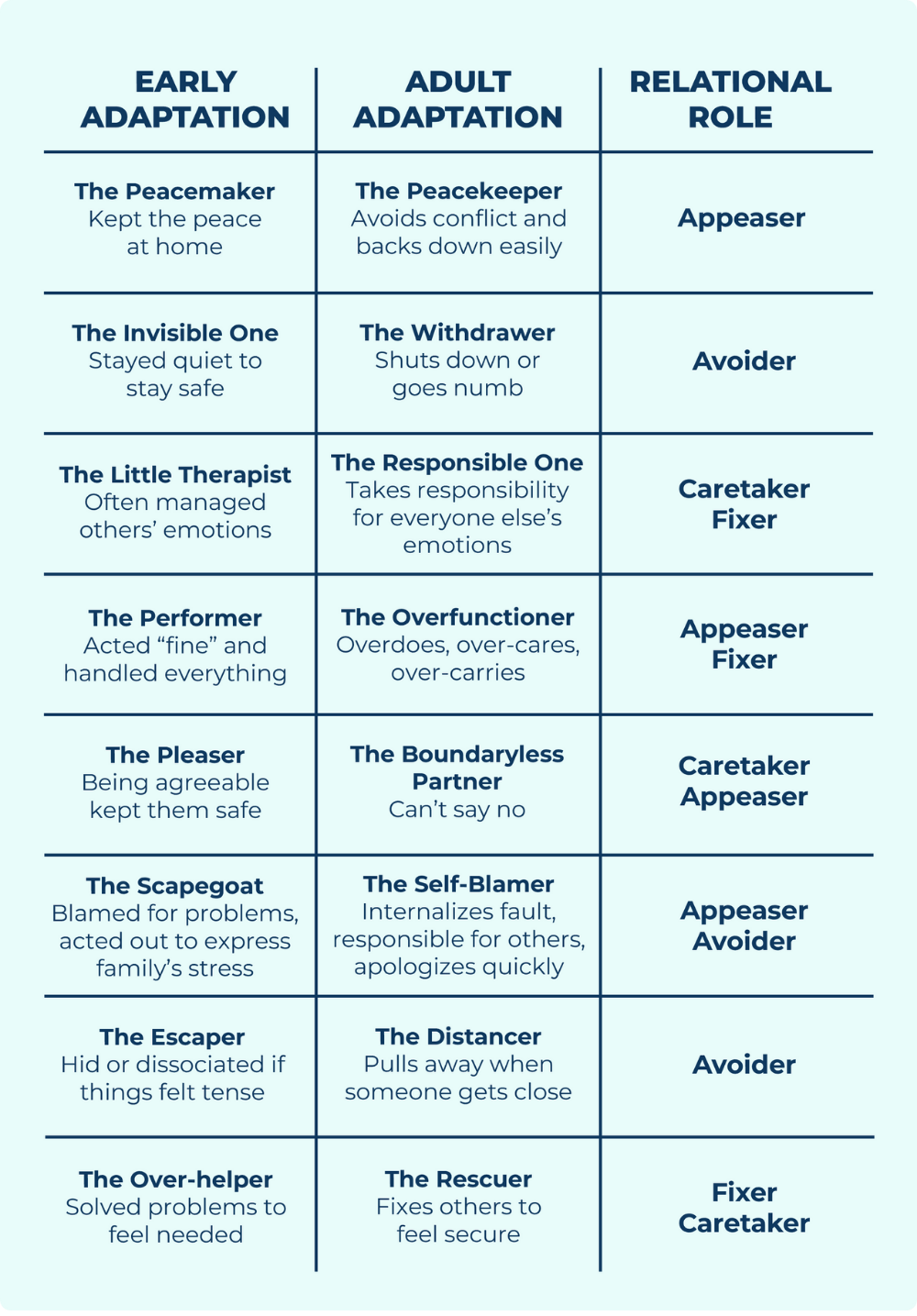
You might become the Caretaker, the Fixer, the Appeaser, or the Avoider. These roles aren’t random. They’re the shapes your nervous system learned to take to stay connected and reduce risk.
These roles are not static and often overlap. They can play out differently based on an individual’s circumstances and resources, leading to numerous adaptations and combinations.
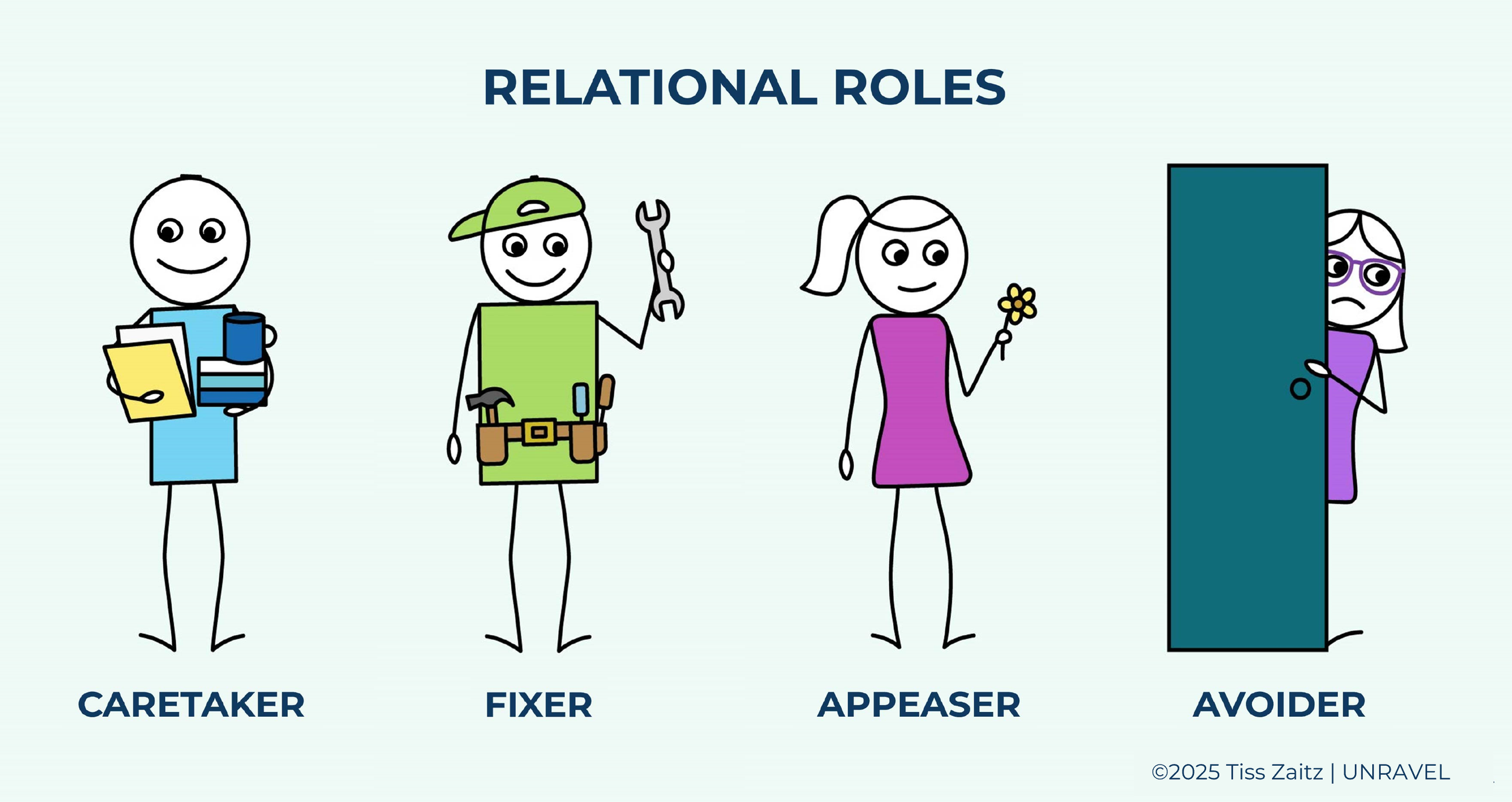
Roles feel stable because they’re familiar. They give you a script. They tell you how to show up, what’s expected of you, and what not to ask for. And because they once worked, they can feel responsible, mature, even admirable.
But roles come with limits. When you’re locked into a role, you lose flexibility. You stop responding to what’s actually happening and start responding from habit. The role leads, and the rest of you follows.
Most people don’t choose their roles. They inherit them from early relationships and reinforce them through repetition. You don’t need to eliminate your roles entirely. You need to recognize when the Caretaker, Fixer, Appeaser, or Avoider is running the show instead of supporting you.
Awareness doesn’t mean abandoning who you are. It means loosening the grip of roles that no longer serve you, so you have more room to respond instead of perform.
These roles are rarely random personality traits, they are protective positions your nervous system learned to take on in order to feel safer in relationships. The fixer tries to restore stability. The appeaser tries to prevent conflict. The avoider tries to reduce threat through distance. The caretaker tries to preserve connection by overfunctioning. What looks different on the surface is often serving the same underlying purpose: reducing fear, preserving attachment, or regaining a sense of control.

They often show up as quick conclusions:
This means they don’t care.
If I don’t fix this, I’ll lose them.
I’m not good enough for them.
I’m asking for too much.
They deserve better than me.
These stories feel true because they’re familiar. They’re shaped by past experiences and reinforced by repetition. Over time, they become the lens through which you interpret tone, silence, conflict, and closeness. You’re not reacting to what’s happening but what you’ve learned to expect.
Once a story takes hold, behavior follows automatically. If the story says connection isn’t safe, you pull away. If it says you have to earn love, you over-give. If it says conflict leads to loss, you appease or disappear. The behavior makes sense within the story, even when it costs you.
The Stories That Drive Your Behavior
Behavior doesn’t come out of nowhere. It’s driven by stories you tell yourself in moments of uncertainty, threat, or disconnection. This is called defensive narrative control. . These stories don’t usually sound dramatic. They sound reasonable. Logical. True.
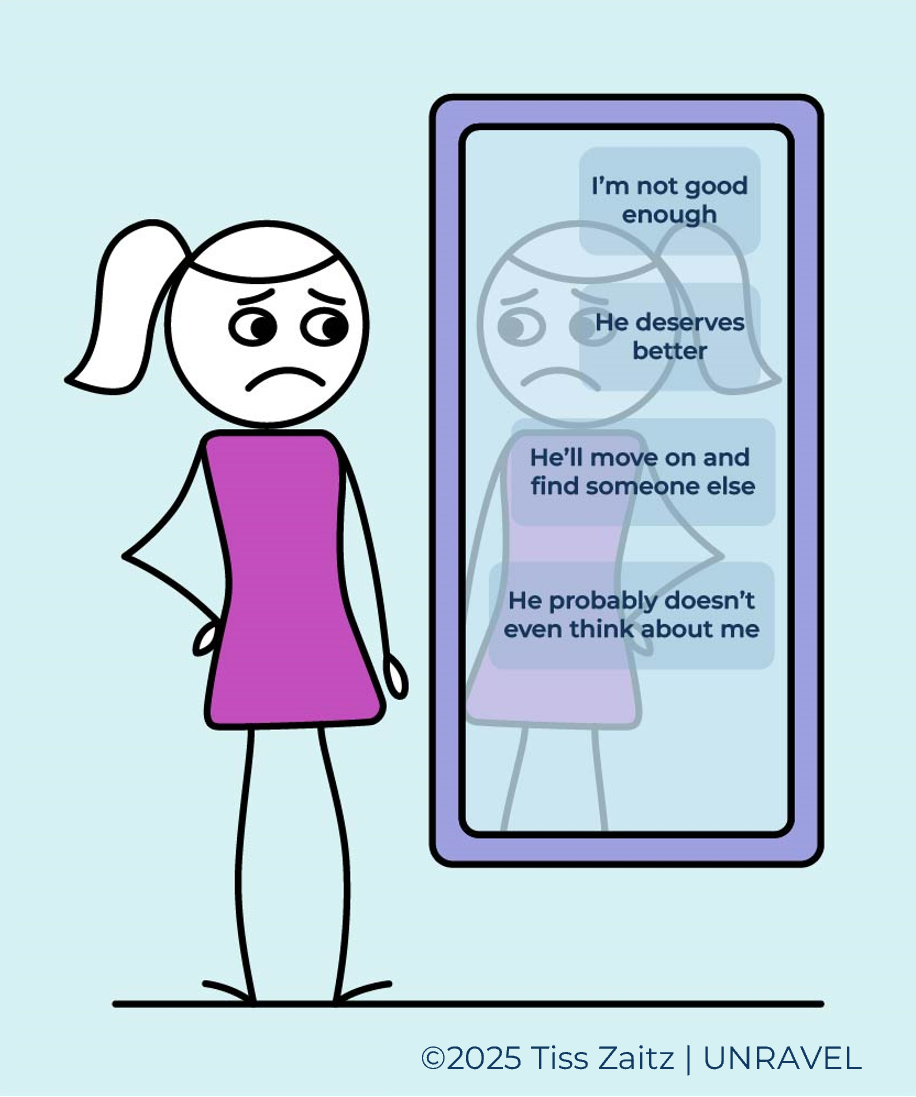
The problem isn’t that you have stories. Everyone does. The problem is when you treat them as truth instead of interpretation. When that happens, you don’t just react to situations, you reinforce the same patterns over and over again.
Seeing your stories clearly doesn’t mean arguing with them or trying to replace them with positive thinking. It means noticing when a familiar narrative is at the wheel. That awareness creates just enough space to pause, question the story, and respond differently.

Here are 6 Situation Cards, each showing the common conditioned responses to a given situation and some healthier alternative responses you could try instead. Use the sliders below to see toggle between the two.
These conditioned responses aren’t flaws. They’re habits you learned to survive environments that didn’t give you better options. Now you have better options.

Behavior You Think Is Normal, But Isn’t
Most people don’t recognize their own unhealthy behavior because it feels familiar. You call it “just how I am” or “how relationships work.” It doesn’t occur to you that what you’ve normalized was rooted in fear, not preference. It was adapted.
Overexplaining may feel important. Avoiding conflict can sound mature. People-pleasing often masquerades as kindness while chasing someone who’s pulling away can feel like care. But when behavior is driven by fear rather than choice, “familiarity” gets misinterpreted as “healthy.”
Because these patterns once helped you stay safe, you don’t question them. They fire automatically, before you can stop to consider another option. You may think you’re being flexible, loyal, or low-maintenance, but you’re actually staying inside a pattern that no longer serves you.
This section isn’t about shaming yourself. It’s about accuracy. When you stop calling survival behavior “normal,” you create space for different choices. That’s where patterns begin to loosen.

Behavior That You Think Protects You, But Actually Hurts You
Many of the behaviors you rely on feel protective. They reduce anxiety, prevent conflict, or give you a sense of control. In the moment, they work. That’s why you keep using them.
The problem is that short-term relief often creates long-term damage. What soothes your nervous system in the moment can quietly erode trust, intimacy, and self-respect over time. You may feel safer, but you also feel stuck.
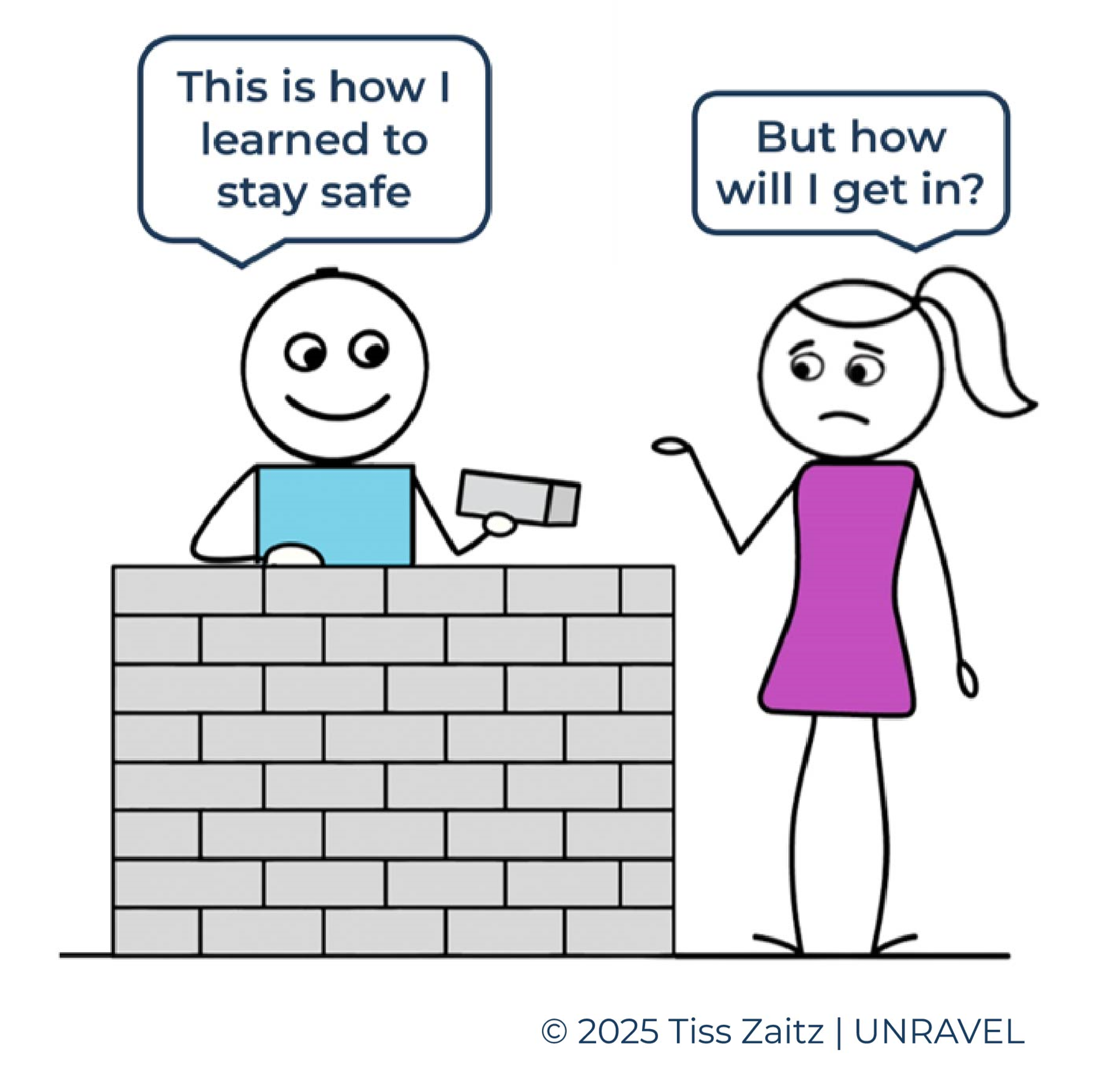
You might avoid hard conversations to keep the peace, then feel resentful and unheard. You might overfunction to prevent disappointment, then feel exhausted and invisible. You might pull away to protect yourself, then feel disconnected and alone. The behavior does what it’s meant to do, but it also creates the very outcomes you’re trying to avoid.
Protection becomes a problem when it’s automatic and unquestioned. This is how defense mechanisms work. When fear is driving the wheel, behavior stops being responsive and starts being repetitive. You’re no longer choosing what fits the situation. You’re repeating what once helped you survive it.
Seeing this clearly isn’t about blaming yourself. It’s about noticing when protection has turned into limitation. And once you can see that, you’re no longer locked into repeating it.

What Your Patterns Cost You
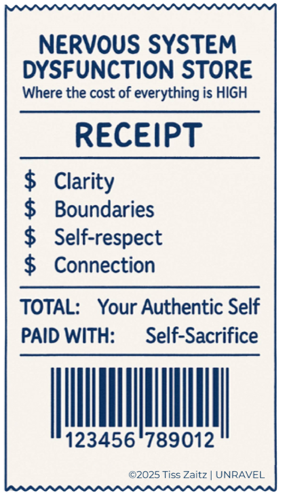
Patterns always have a cost. They can feel protective in the moment, but there’s always a bill waiting on the other side.
When you act on instinct, the payoff is immediate relief. You calm the tension and avoid the conflict, but the long-term cost is high. When you people-please, you lose boundaries. Every time you chase, you lose self-respect. If you withdraw, you lose connection.
Patterns don’t just shape your behavior. They shape your relationships. They influence who you choose, what you tolerate, how much you give, and where you shrink. Over time, they quietly decide which needs you ignore and which parts of yourself you hide because they don’t feel safe to bring forward.
The hardest part is that the cost feels familiar, so it barely registers as a cost at all. You live with it because it matches the version of connection you learned to expect.
Seeing the cost of your patterns isn’t about blaming yourself. It’s about honesty. You can’t choose differently if you can’t see what repeating the same behavior is taking from you.

Seeing Yourself in Real Time
At some point, you start to notice your patterns while they’re happening. Not afterward. Not hours later. In real time.
This moment can feel disorienting. You feel the familiar impulse rise, the urge to shut down, fix, appease, explain, or pull away, but now you can see it. You’re aware of what you’re about to do even as your body wants to do it anyway.
That gap between impulse and action is uncomfortable. You may feel exposed, uncertain, or emotionally raw. The old response still feels compelling, but it no longer feels automatic. You’re caught between what’s familiar and what you know doesn’t actually work.
This stage often comes with frustration. You might think, If I can see it, why can’t I stop it? But noticing isn’t the same as changing. Awareness doesn’t eliminate the urge. It simply makes the pattern visible.
Seeing yourself in real time isn’t a failure or a setback. It’s a sign that something has shifted. You’re no longer fully inside the pattern. You’re standing close enough to it to recognize it as it unfolds.
And that recognition, uncomfortable as it is, is what makes change possible.

Interrupting the Pattern
Interrupting a pattern doesn’t mean shutting down the urge or forcing yourself to respond differently. It means staying present instead of automatically following the familiar response.
In real life, interruption is small. You may still feel the pull to shut down, appease, fix, or withdraw. The difference is that you don’t disappear into it completely. You pause long enough to stay with the discomfort instead of escaping it.
This is where many people get stuck. They think interruption means control. It doesn’t. The urge can still be there. The fear can still be loud. Interrupting the pattern simply means you don’t let the impulse make the decision for you.
At first, interruption often happens internally. You stay in the conversation a little longer. You explain less. You don’t rush to smooth things over. You tolerate the feeling instead of trying to eliminate it.
That tolerance is the work.

Why Change Feels So Hard
Change doesn’t just feel uncomfortable. It feels unsafe.
Your nervous system is wired to prefer what’s familiar, even when what’s familiar hurts. Old patterns come with predictability. You know the emotional terrain. You know how to brace, adjust, or recover. New behavior removes that map.
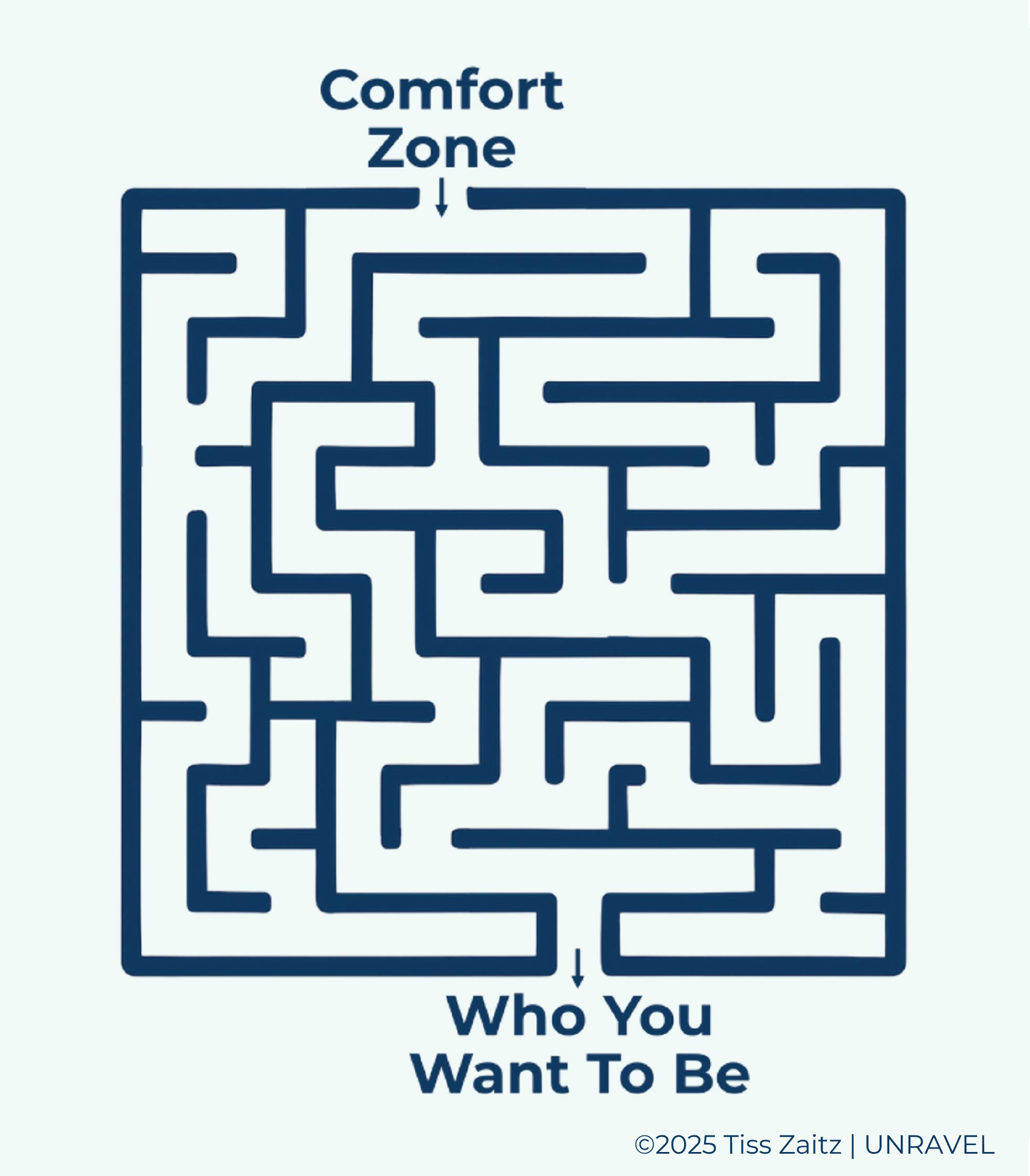
When you stop responding the way you always have, you lose the protection of the known. You don’t yet trust the alternative. That uncertainty can feel more threatening than staying stuck, even when staying stuck is painful.
Change also disrupts identity. Patterns aren’t just habits. They’re how you’ve learned to relate, cope, and stay connected. Letting go of them can feel like losing a part of yourself, even when that part no longer serves you.
This is why insight isn’t enough. You’re not just choosing a different response. You’re tolerating not knowing how things will unfold. You’re staying present without the comfort of your usual defenses.
If change feels hard, it’s not because you’re doing it wrong. It’s because you’re moving outside what your nervous system has learned to trust.

The Hidden Costs of Not Changing
The cost of staying the same isn’t always obvious. It doesn’t usually show up as a crisis. It shows up quietly, over time.
You lose momentum. You shrink your wants. You adjust your expectations downward so things feel manageable. You tell yourself it’s fine, that this is just how relationships are, that asking for more would only make things harder.
But the cost accumulates. Each time you avoid discomfort, you reinforce the same patterns. Each time you choose familiarity over risk, you narrow your options. The life you’re living becomes more predictable, but also smaller.
What makes this hard to see is that nothing feels wrong enough in any single moment. The damage happens through repetition. Through years of choosing what’s tolerable instead of what’s true.
Not changing is still a choice. It just doesn’t feel like one, because it looks like staying put. But staying put has consequences, whether you acknowledge them or not.
Seeing the hidden cost isn’t about pressuring yourself to change. It’s about being honest about what staying the same is quietly taking from you.

Choosing Behaviors That Are Uncomfortable but Healthy
Healthy behavior often feels uncomfortable at first. Not because it’s wrong, but because it’s unfamiliar.
When you stop defaulting to old patterns, you lose the immediate relief they provided. You feel more exposed. More uncertain. You’re no longer protected by the responses that once kept you safe, even though they no longer serve you.
Choosing differently doesn’t mean feeling confident or calm. It means acting without the comfort of certainty. You may speak up while feeling anxious. You may hold a boundary while feeling guilty. You may stay present instead of withdrawing, even when every instinct tells you to escape.
Healthy choices are often quieter than survival responses. They don’t come with a rush of relief. They come with discomfort that fades slowly, as your nervous system learns that nothing terrible happens when you don’t follow the old script.
This isn’t about forcing change or overriding your feelings. It’s about practicing new responses long enough for your system to recalibrate. Over time, what once felt unbearable becomes tolerable. And what once felt impossible becomes available.
You don’t have to have the answers yet. Being here at all means you’ve stopped pretending everything is fine, and that’s a bigger step than most people ever take.
Seeing the truth is painful and disorienting, but it’s also the moment your life starts shifting. You’re facing the thing you were afraid to look at, and that takes real courage.
Even if you’re not ready to act, you’re already moving. You’re already changing. And that matters.

Before you go…
I hope this journey gave you something useful—clarity, validation, maybe even a little relief from the confusion.
If you're feeling overwhelmed or unsure what comes next, that makes sense.
You're working through hard things.
If you want to keep going, UNRAVEL has more to offer:
The Foundations explain the mechanics of relationship behavior.
The Models & Frameworks show how those mechanics create the patterns people get stuck in.
Those pages take a slightly more educational approach.
But they’re still written in clear, everyday language.
No jargon. No 7 syllable words.
If you want to share your story, you can do that here.
Your experience matters.
Thank you for trusting me to guide you. I hope you find healthier, happier relationships ahead.

Every relationship is unique, and emotional harm doesn’t always follow the same patterns. What you’ve read here reflects common dynamics, but it’s not a diagnosis. I hope something resonated, but this content isn’t therapy or psychological, medical, or legal advice. It’s here to offer clarity, not conclusions.