
I think my relationship might be unhealthy or emotionally unfulfilling.
You’re probably not imagining things…
Not all unhealthy relationships are toxic. Most are just…off. You don’t feel unsafe, but you don’t feel deeply seen either. There’s no big betrayal or clear abuse, and you do love each other—but something essential is missing.
This journey is for the people who stay too long, hoping things will get better. The ones who keep lowering their needs and calling it growth. Who tell themselves that peace matters more than passion, or that good enough is good enough. The ones who vowed never to abandon someone the way they were abandoned. So they stay.
Some stay because it’s not so bad, or they’ve built a life and don’t want to disrupt it. Others don’t want to lose the time they’ve invested or be single again. Some just don’t want to be the “bad guy” when their partner hasn’t done anything wrong.
None of that means you don’t care, love can exist in a relationship that isn’t working. Sometimes two people just don’t fit the way they hoped they would. It doesn’t mean someone’s not trying hard enough or that anyone expects too much, it just means needs aren’t being met. When something feels missing, it usually is, and it’s tough to stay emotionally all-in. If you’re starting to check out or having a lot of doubts, your partner likely senses that and feels something missing, too. It’s not a bad match, just a mismatch.
This isn’t about blame. It’s about naming the kind of relationship that drains you quietly, not through cruelty but through complacency.
Whether you’ve left or stayed, whether you’re the one who wanted more or the one who couldn’t give it, you’re in the right place.
Why good enough is actually the worst
Emotionally unfulfilling relationships are hard to name because everything looks good on the surface. No betrayals, no explosive fights, no on-again-off-agains. Maybe you get along splendidly, like great friends. You have routines, inside jokes, travel plans. But underneath all that, something’s not quite right.
When you’re truly in a happy relationship—you’re in love, connected, and fulfilled, you know it. You don’t have to rationalize doubts or pretend anything. When you’re relationship is toxic or just disconnected and full of internal conflict, you know it. You don’t question these things because you don’t have to. You don’t have a single doubt.
It’s when you’re uncertain, questioning, complacent, that you should be concerned. When nothing is actually wrong, but things don’t always feel right. You’re not unhappy, and your partner hasn’t done anything bad. In fact, they’re pretty good to you, yet it feels like something is missing.
It’s when you’ve accepted that maybe this is the best you’ll get even if it’s not what you hoped it would be. Your relationship might be pleasant and loving, but you can’t help but hope something gets better. This is the middle—relationship limbo—where you’re not happy, but nothing is technically wrong. It’s confusing and can leave you unsure what to do.
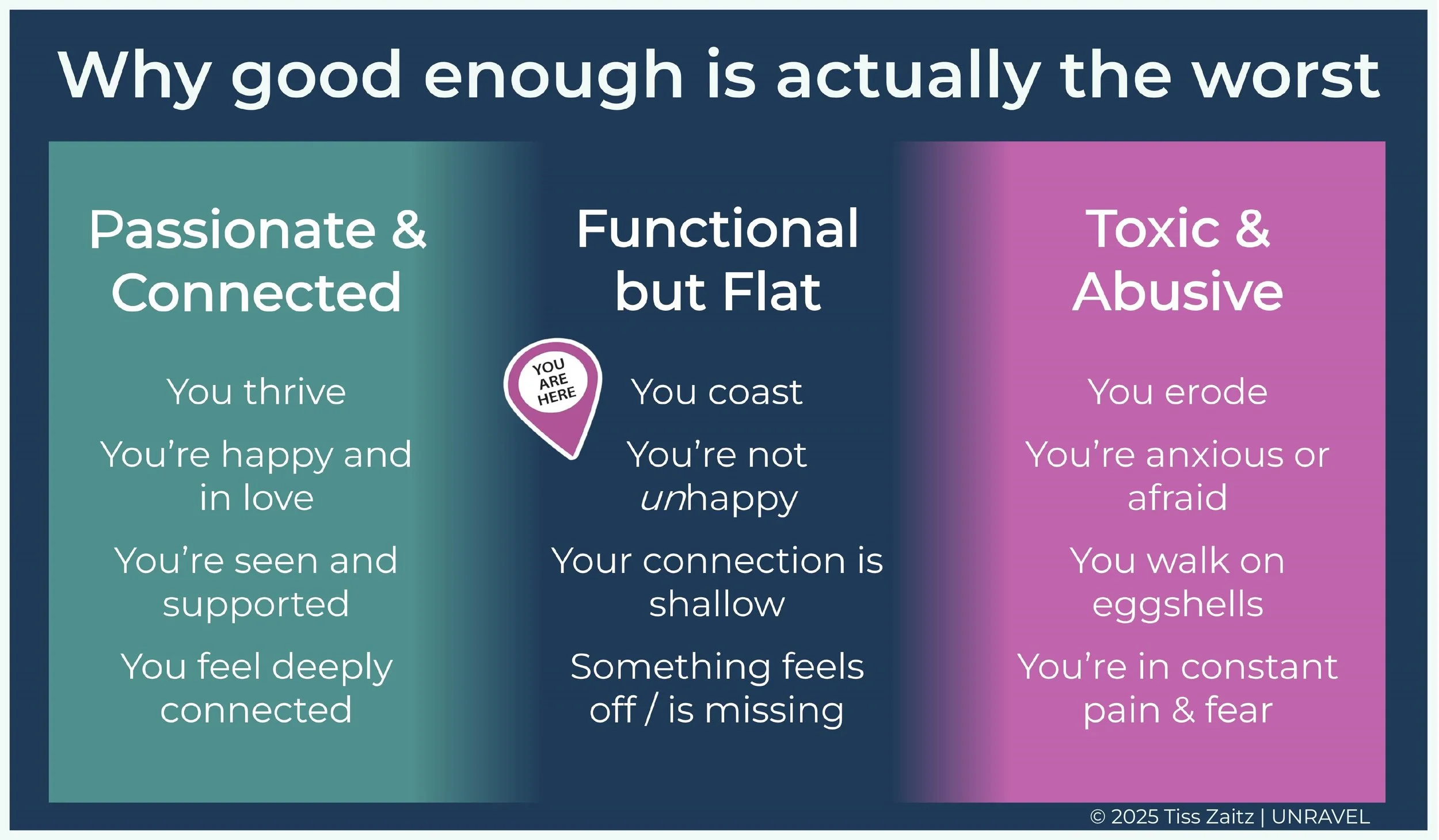
Bottom line: Miserable relationships will lead to action because things are too bad to stay the same. If they aren’t bad enough, though, you won’t take action. You won’t disrupt the status quo until it becomes absolutely necessary.

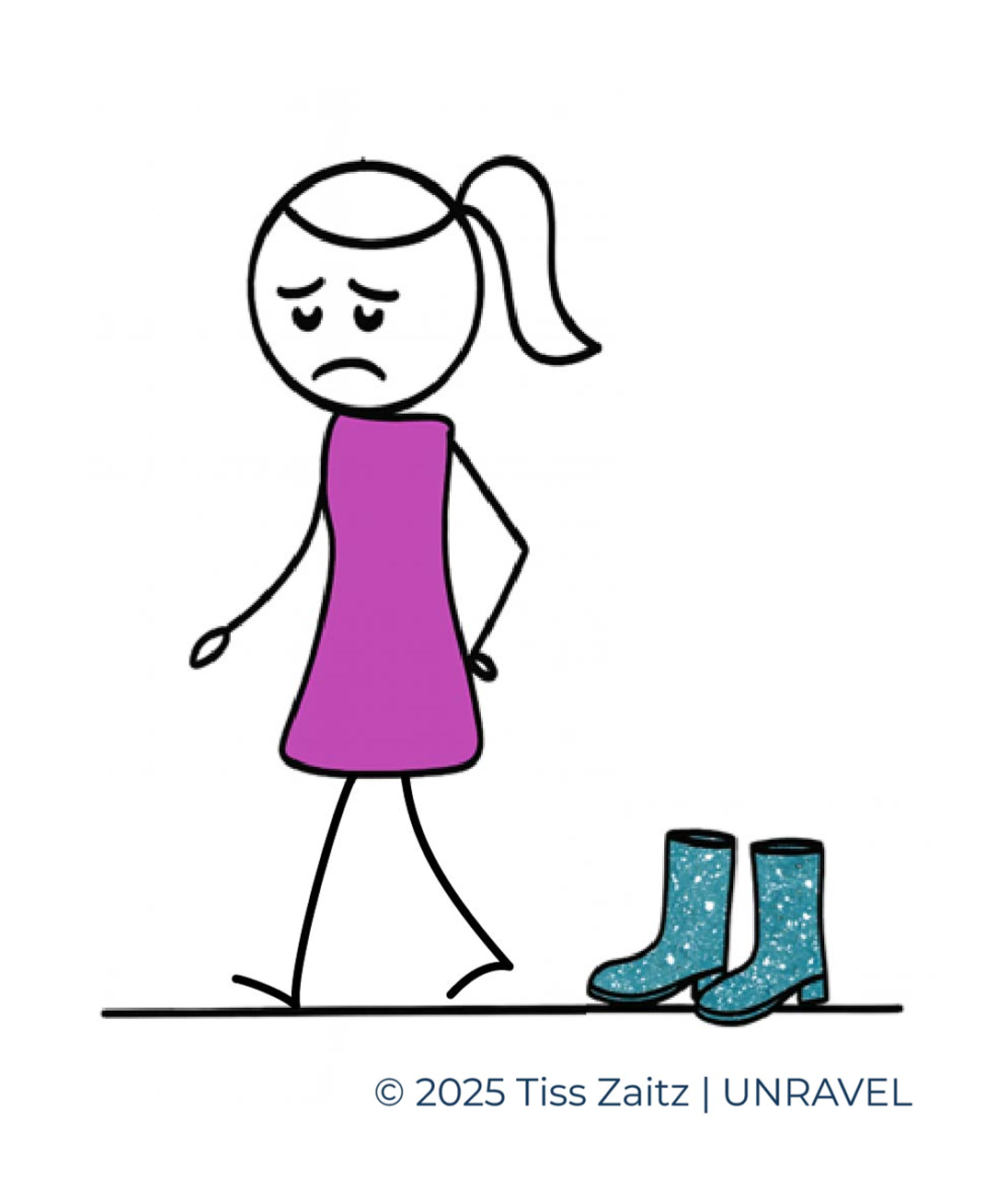
Imagine finding a pair of shoes that seem perfect—your style, your color, they go with everything. You love how they look and how they make you feel. But after wearing them for a while, you realize they’re not that comfortable. They pinch, rub, or leave blisters, but you love them, so you keep wearing them.
Eventually, you start planning your days around them, choosing activities that won’t leave you standing too long. You tell yourself it’s worth it because they’re your favorite shoes. But over time, the mild discomfort turns into sore feet, then knee pain, then back pain.
You hold onto them because you’ve invested so much in them, you’ve shown them off and your friends all like them. But after a while, the excitement fades. You’re just tired of hurting. When you finally let them go, it’s not because you stopped loving them—it’s because they were never the right fit.
The pain doesn’t disappear overnight, but it fades. And you realize if you’d stopped wearing them sooner, you could’ve saved yourself a lot of unnecessary damage. There was never anything wrong with the shoes. Letting them go was hard, but keeping them hurt more.

Why you stay
This is where people often get stuck, not because they don’t know something is off, but because there is rarely a single, obvious reason to leave. Nothing is actively terrible. No one is cheating, screaming, or being cruel. On paper, it may even look like a good relationship, and that is exactly what makes this path so difficult to recognize.
Sometimes the hardest part is that there is no clear reason to leave, only a growing sense that something essential is missing. There is no betrayal, no explosive fight, no story that feels easy to explain to yourself or anyone else. Just an increasing awareness that something doesn’t quite fit.
People stay for all kinds of reasons: shared history, loyalty, fear of hurting someone good, fear of being alone, financial entanglement, children, timing, age, fear of social fallout, or simply the fact that leaving means blowing up a life that is otherwise stable.
Sometimes it’s sunk cost. You’ve already invested years, built routines, made plans, and told everyone this is your person. If you walk away now, you’ve wasted time. But the longer you stay, the more you have to lose. Walking away can feel like social and emotional suicide.
Sometimes it’s fear of the unknown. What if this is as good as it gets? What if you leave and regret it? What if you’re asking for too much? What if you never find someone else?
And sometimes it’s hope, not in what the relationship is, but in what it could become. You’re sure things will get better when you move in together, get engaged, get married, move to a new city. You just have to hold on a little longer and things will finally click; the connection will deepen, the missing piece will somehow appear.
You know if you try harder, commit more, prove you’re worthy, and give everything you have, surely it’ll get better. It has to. If you can’t make it work, what does it say about you? You’re committed to making it work at any cost, so you wait. You give it more time. You try harder.

How We Learn to Live Around It
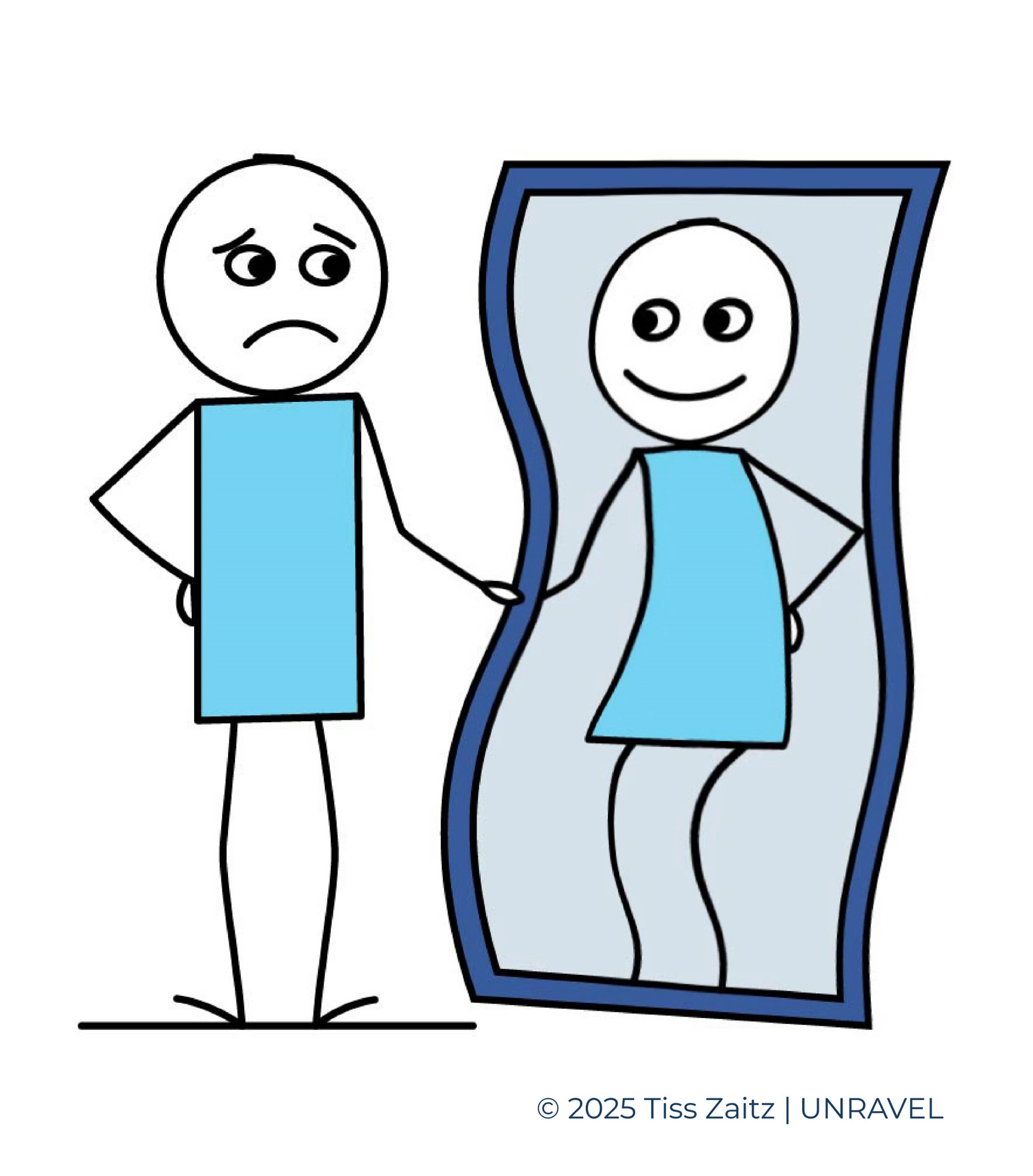
Over time, you start settling for less than enough and rationalizing it. You stop asking whether you feel deeply fulfilled and start asking if this is good enough.
This is where your sense of normal can start to shift. What always felt a bit off starts to feel manageable, explainable, or not worth making a big deal over. What you have isn’t enough, but instead of leaving, you lower the bar. You tell yourself you can live without it. Your bar keeps getting lower.
Things that once mattered deeply to you start to feel out of reach. Deep emotional connection, desire, being deeply seen, shared vision, genuine fulfillment—these can slowly get recategorized from needs to nice-to-haves.
You start telling yourself some version of: no relationship is perfect, maybe this is just what adult relationships look like, maybe I’m expecting too much, maybe I don’t deserve more. And because nothing is actively terrible, those explanations can sound reasonable.
Over time, the discomfort doesn’t disappear, it just becomes familiar. The quiet ache turns into background noise. You learn to live around it, normalize it, and build a life on top of it. You appear to be happy, but deep down something is still missing.

Why Staying Feels Easier
Even when you know something isn’t right, staying can still feel easier than facing what comes next. By this point, it’s usually not about logic. You already know something feels off. The harder part is what leaving asks you to face.
The idea of hurting someone you care about or dismantling the life you’ve built can feel unbearable. So you wait. You tell yourself you need more clarity, more certainty, a better reason. You give it more time. You try harder.
But often, what feels like patience is really avoidance. You’re not waiting because time is likely to change anything. You’re waiting because leaving means facing pain right now.
It may feel unfair to leave someone who hasn’t done anything “wrong.” You don’t want to be the one who blows up the life you built, disappoints your family, or becomes the person who walked away from something that looked good on paper. Maybe you tell yourself you owe it to the relationship to keep trying. Maybe you tell yourself leaving would make you selfish, ungrateful, or a failure.
Sometimes what keeps you stuck is guilt. Sometimes it’s fear. Sometimes it’s the hope that if you just hold on a little longer, the feeling will pass and things will finally click.
A lot of this is your nervous system trying to protect you from loss, uncertainty, and the immediate pain of change. Staying can feel safer because it lets you postpone the grief, the conflict, and the fallout. It feels like protection.
But protection and avoidance are not always the same thing.
The truth is, staying often just spreads out the pain over time. The pain of leaving is immediate. The pain of staying is quieter, slower, and easier to justify, which is exactly why people can remain stuck for months, years, even decades.
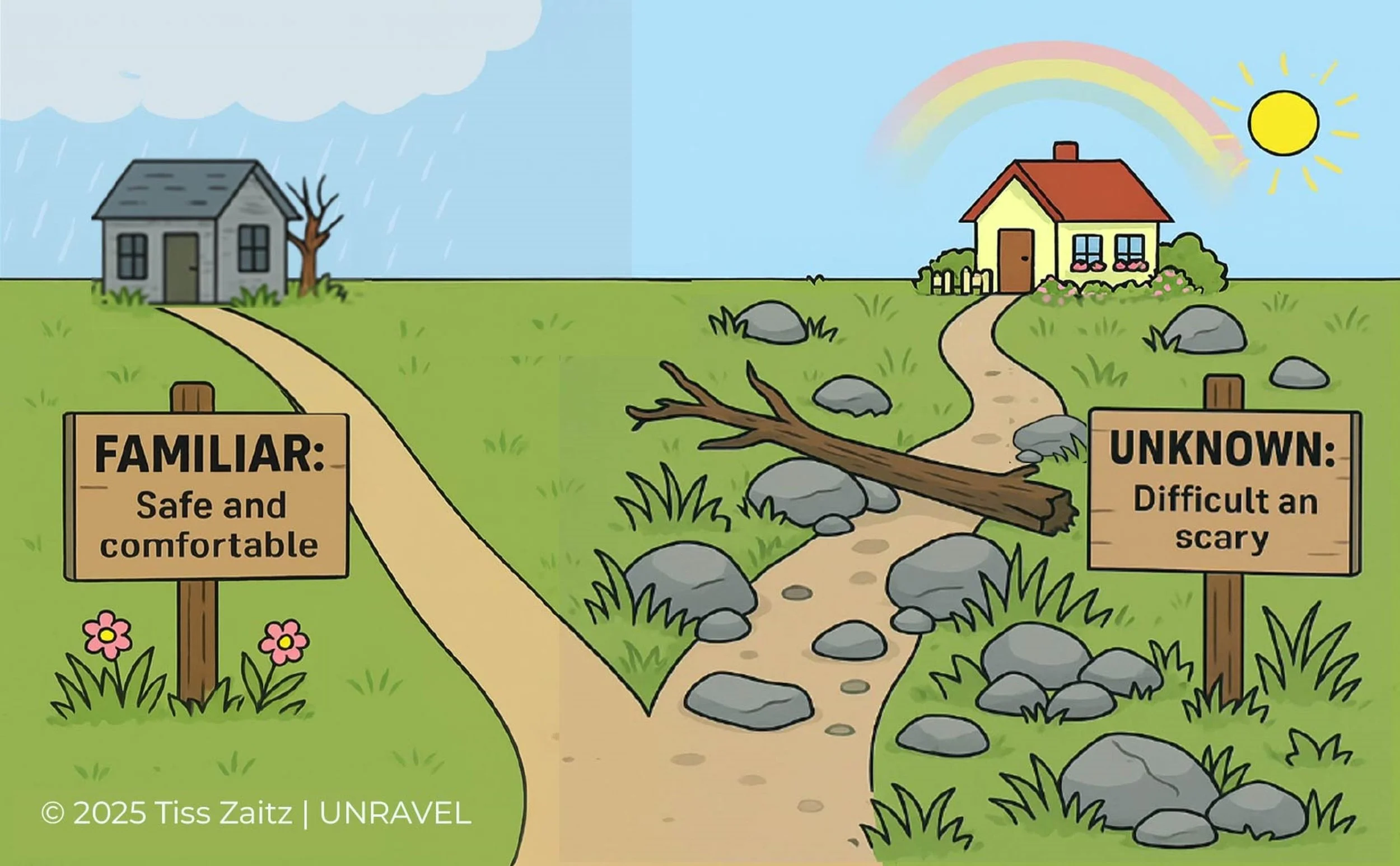
The familiar road feels safer and more comfortable, but it may not lead you where you want to go. The unknown road seems impossible at first, but in the long run, you might find exactly what you've been looking for.
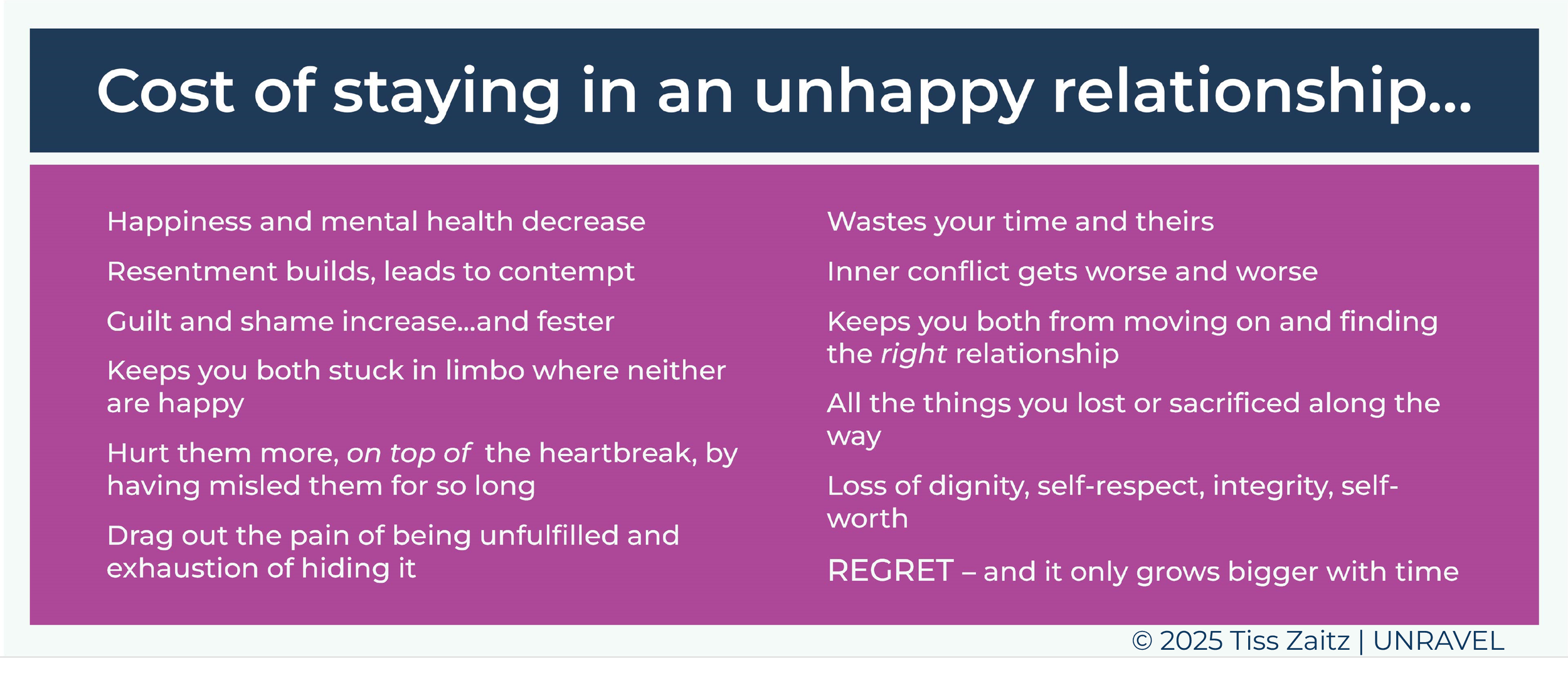
The Cost of Staying
Staying when you’re not truly happy drains you.
Little by little, you lower your expectations, quiet your needs, and shrink yourself just enough to keep the peace. What once felt like a passing doubt starts becoming your normal.
Avoidance may feel protective, but it keeps both of you stuck. Waiting rarely changes what is fundamentally missing. More often, it just drags out what you already know.
Your partner may sense your distance without understanding it. They may feel the shift even if they can’t name it. They might start walking on eggshells, trying harder, or blaming themselves for something they can’t quite put their finger on.
And in the meantime, you may find yourself going through the motions—showing up physically while emotionally pulling back. You avoid hard conversations, sidestep conflict, and keep acting as if everything is fine because the alternative feels too painful to confront.
Now both of you are living inside something that no longer feels fully honest.
This is where the real damage happens.
One person stays because they believe leaving would hurt the other. But staying in a relationship that no longer feels right often causes its own kind of harm: confusion, self-doubt, resentment, emotional distance, and years spent investing in something that isn’t what it appears to be.
The longer you stay, the more intertwined your lives become. Shared leases become shared homes. Shared routines become marriages, children, custody schedules, financial entanglements, and years that are harder to untangle later.
The pain of leaving is temporary. The cost of staying often lingers long after the relationship ends.
This isn’t just about staying in the wrong relationship. It’s about what staying does to both of you over time.

So How Do You Know What to Do?
There’s a cost to staying, and there’s a cost to leaving. Both hurt.
Most people choose the one that hurts less right now, which is usually staying. It feels easier to tolerate what’s familiar and comfortable than to face the immediate pain of loss, uncertainty, and change. But avoiding pain now almost always means facing worse pain later.
Staying has consequences; they’re just quieter. They build slowly over time—through emotional distance, unmet needs, resentment, confusion, and the growing weight of knowing something isn’t right. And the cost accumulates; the longer you stay, that greater the cost will be.
Leaving brings sharper pain, but it’s often temporary. It may feel like blowing up your life, and for a while it may be exactly that. But a year from now, you’ll likely be in a very different place.
Staying may spare you a brutal few months. But a year from now, you may still be unhappy, still hurting, and still afraid to decide. It’s choosing between a swift blow that you recover from, or death by a thousand papercuts.
We’re wired to maintain the status quo until we have what feels like an irrefutable reason to leave. Contrary to common belief, being unhappy usually isn’t enough. So we endure what’s bearable. We wait until we’re sufficiently miserable before we act.
But not choosing is still a choice. Indecision and inaction often have worse consequences than the wrong decision would have.
You don’t have to decide today. But you do need to be honest about the fact that both paths are hard. Avoiding a hard choice doesn’t protect you; it just delays the impact until it hurts more.
Whether you’ve been together one month or five years, what happens next isn’t just about what you want. It’s also about what it’s already costing you (and your partner) to stay.
You don’t have to be ready to act. But the fact that you’re here, questioning, noticing, trying to make sense of things—that matters.
It’s incredibly difficult to admit that something’s off. It can be terrifying and painful. Just seeking answers takes immense strength and courage, and you’re doing it.
That’s a huge step in the right direction.

Before you go…
I hope this journey gave you something useful—clarity, validation, maybe even a little relief from the confusion.
If you're feeling overwhelmed or unsure what comes next, that makes sense.
You're working through hard things.
If you want to keep going, UNRAVEL has more to offer:
The Foundations explain the mechanics of relationship behavior.
The Models & Frameworks show how those mechanics create the patterns people get stuck in.
Those pages take a slightly more educational approach.
But they’re still written in clear, everyday language.
No jargon. No 7 syllable words.
If you want to share your story, you can do that here.
Your experience matters.
Thank you for trusting me to guide you. I hope you find healthier, happier relationships ahead.

Every relationship is unique, and emotional harm doesn’t always follow the same patterns. What you’ve read here reflects common dynamics, but it’s not a diagnosis. I hope something resonated, but this content isn’t therapy or psychological, medical, or legal advice. It’s here to offer clarity, not conclusions.